• World Parkinson’s Day – 2019

    April is Parkinson’s Awareness Month and this Thursday, April 11th, is World Parkinson’s Day. This year, our cycling group at the YMCA decided to do something to increase awareness of PD. We are moving our usual Thursday Pedaling for Parkinson’s class from from the cycling class room to the lobby of the Y. We have invited all of the local neurologists and Movement Disorder Specialists,along with local Parkinson’s groups and the media to come and see what Pedaling for PD is all about. So if you are in the Sarasota area this week, stop by the Evalyn Sadlier Jones YMCA at 8301 Potter Park Dr at 10am to see Pedaling for Parkinson’s in action.

    Those of you who have been following this blog for very long know that I feel that this program has slowed the progression of my PD. When I miss a class or two I have seen a noticeable change in the time my medication lasts. The medication seems to wear off sooner than usual and take longer to ‘kick in’ after I take a new dose. I know I have pushed exercise over and over in this blog but I can’t emphasize it enough. There are many opportunities to exercise besides cycling or playing tennis – you just need to find one you like (or dislike the least) and stick with it for a month and see if you don’t agree, exercise is the key ingredient to fight PD.

    Speaking of medication, I was doing great on the new regime of two Rytary and 1/2 a tablet of Mirapex 5 times a day until a couple of weeks ago when it suddenly stopped working so well. I would take the 1st dose of the day and it worked perfectly but when I took the second dose it would sometimes have the opposite effect, causing me to walk slowly with limited arm movement as though I was completely unmedicated. This would last up to 2 hours and then I experienced “wearing on” instead of wearing off as the meds finally kicked in.

    So I emailed my Dr and while waiting for his response did what many of us do, researched the internet for other people who have experienced the same effect and then started experimenting with different dosages and the timing of the dose. I am getting pretty good results reducing the Rytary to 1 for doses 2 and 4 but I will keep you posted as this saga continues. In the meantime today my ninety day supply of meds arrived, I need a shelf just for the Rytary 😀

  • Happy New Year!

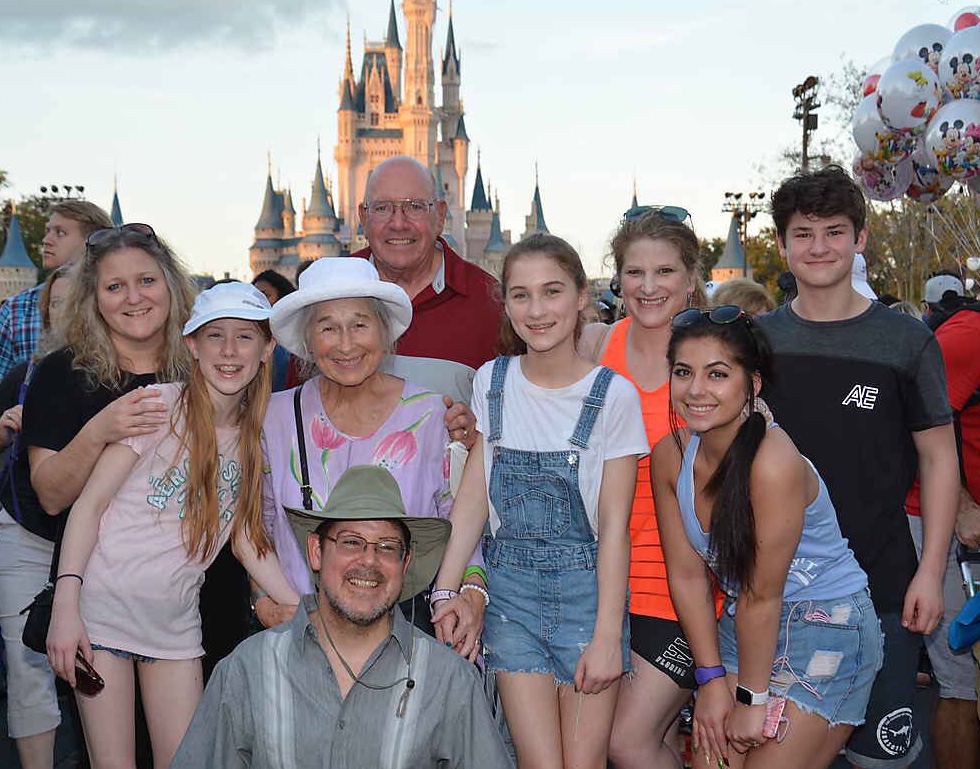
    Well maybe it should read Happy Chinese New Year! It’s February already and I’m just getting to my first post for the new year! I hope everyone had a great holiday season. We had a great time with family over the Christmas/New Year holiday which included a trip to Disney World to celebrate New Year’s Eve.

    Disney World


    During the busy holiday season, we tried to keep up with our exercise schedule, cycling two days a week, playing as much tennis as possible and attending the Dance for PD class every week. I continue to enjoy playing tennis and even played in a men’s double tournament here in our community finishing in the middle of the pack.

    January included a visit to my Neurologist. While I am doing well I was noticing that my medication wearing OFF anywhere from 30 – 60 minutes before the next dose, particularly when the next dose occurred while I was exercising. We discussed two options, change the timing so I would take more Sinemet or try Rytary, an extended release version of Levodopa/Carbidopa.

    We decided to try the Rytary and I was given a sample to take once a day in the morning for a week. After the initial week I found that ON time was at least 30 – 60 minutes longer and some days I noticed no wearing off at all between doses.

    So I reported my findings back to my Doctor and we decided to go ‘full bore’ and replace my Sinemet tablets with the Rytary on a every 4 hour schedule. So far I am happy with the results with only occasional OFF periods, usually because I didn’t take them on schedule 🙂 I’ll keep you posted as I continue this new regimen.

    On the research front, if you are interested what’s coming up in 2019, I highly recommend you read “The Road Ahead: Parkinson’s Research in 2019” by Simon Stott over at the Science of PD blog. He expects that several clinical trials will have some data to report during the year and several promising projects will start. Click here to read.

    One last note, I have added a link on the website to a document I prepared recently for a friend of a friend who had just been diagnosed with PD. It contains my thoughts about what to do after that initial diagnoses, lots of links to sites I like, and my thoughts / recommendations about exercise, finding a Movement Disorder Specialist, etc. Click on the link in the Now What? box at the top right to view, print or download.

    “It does not matter how slowly you go as long as you do not stop.” – Confucius


  • Rallying, Parkinson’s Movement Website, Care Partners Month, and Giving Tuesday!

    Yep, as you can tell by the title, this a catch up post lightly touching on many topics.  For various reasons, it has been tough to find time for writing but I have a chance today so will try to cover all of these topics (and maybe more) in this post. Let’s get started!

    Rallying to the Challenge – 2018

    As you might recall from my last post, we had just attended the Grand Challenges in PD meeting in Grand Rapids MI.  This is a two day meeting that brings together scientists, clinicians and people with Parkinson’s to explore the latest in  Parkinson’s disease research. The meeting is hosted by the Van Andel Research Institute and includes a parallel meeting for PwP’s hosted by Van Andel and The Cure Parkinson’s Trust.   This is one of the few meetings that brings us all together and gives the  Parkinson’s community a chance to provide input impacting ongoing and planned research.  Even better, we got to say hello to many old friends while making many new friends as the meeting progressed.  At the end of the meeting, the Cure Parkinson’s Trust presented the Tom Isaacs Award to two outstanding individuals, Professor Bas Bloem of the  Netherlands who founded ParkinsonNet, an innovative PD care program and Simon Stott, who publishes the Science of PD  Blog about current research in PD which I have mentioned in previous posts. 

    It was a great meeting and you can read more about it here and here.  Next year’s meeting is set for August 21 and 22 in case you would like to attend, click here for more information.

    Parkinson’s Movement Website

    The Cure Parkinson’s Trust sponsors the Parkinson’s Movement website which is maintained by PwP’s for PwP’s.  This website has recently had a total makeover and I highly recommend  you add it to your list of sites to visit on a regular basis.  The site has information about on going research and provides opportunities to get involved in research or share your insights.  They have a section called Hype vs Hope where they ‘fact check’ recent news stories, claims of a cure, etc.  They also have have a large list of  PD advocates listed along with their country of residence, the topics they advocate for and other information.  Check it out here.

    Care Partners Month

    November is National Care Partners Month and I know that you, like me, are thankful for your care partner(s) everyday of the year.  But this is a good time to remind you and your care partner that there are a lot of resources available for care partners including the Caring and Coping guide written for care partners for any stage of PD and available for the Parkinson’s Foundation.  You can download a copy or order a paper copy here

    Giving Tuesday

    Tuesday the 27th is Giving Tuesday.  This is a great opportunity to make a donation to your favorite charity and, in many cases, have it matched.  For example, after successfully raising one million dollars last year,  the Michael J Fox Foundation is shooting to raise two million dollars this year with every donation matched by anonymous donors.  Many other charities have similar opportunities on Tuesday, so scrape the bottom of your pocket book or wallet after Black Friday and Cyber Monday and help us find a cure for PD or the charity of your choice.

    (And Maybe More)

    Ben Stecher who writes the Tomorrow Edition blog has started a 9 part series about the Search for a Cure.  The first part was just published and can be viewed here.  Ben has traveled the world interviewing researchers, medical professionals and others about what they are doing and what the impact might be on the search for a cure, what the cure might look like and when it might happen.  So, another recommendation, sign up to follow Ben’s blog and his search for the cure.

    Dr Ray Dorsey at the University of Rochester in New York is conducting a web based study to see if using a computer with a webcam and microphone will provide sufficient information for patient followup.  The entire study is web based and takes about 10 – 15 minutes.  It requires a computer with webcam and the Chrome browser but it is quick and easy and a chance for you to participate in a clinical trial without leaving your house.  You can get more information and participate in the trial at this website.

    OK  that wraps it up for this post.  I hope everyone has an enjoyable Thanksgiving Holiday!

    “It does not matter how slowly you go as long as you do not stop.” – Confucius

Seasons Greetings!

Hard to believe the year is almost over!  It has been a busy couple of months but I hope to catch up soon and get back to a somewhat regular posting schedule.  In the meantime, we hope everyone has a great holiday and we are looking forward to the new year and more progress in the search for a cure.

Happy Holidays!

Tom and Mara

Seasons Greetings!

Hard to believe the year is almost over!  It has been a busy couple of months but I hope to catch up soon and get back to a somewhat regular posting schedule.  In the meantime, we hope everyone has a great holiday and we are looking forward to the new year and more progress in the search for a cure.

Happy Holidays!

Tom and Mara

Year: 2015

  • Seasons Greetings!

    Hard to believe the year is almost over!  It has been a busy couple of months but I hope to catch up soon and get back to a somewhat regular posting schedule.  In the meantime, we hope everyone has a great holiday and we are looking forward to the new year and more progress in the search for a cure.

    Happy Holidays!

    Tom and Mara

  • Giving Tuesday is Almost Here!

    Tuesday, December 1st is Giving Tuesday. Black Friday is over and Cyber Monday is almost over and Tuesday will be a great opportunity to take some (or all) of the money you saved this weekend and give back by making a donation to a Parkinson’s Disease organization or another cause of your choice. As in past years, many charitable organizations have a matching plan that will double your Giving Tuesday donation for double the benefit.

    In case you need a little inspiration, I am reposting the following article “What is a Parkie? And Why are They so Expensive?“.  This article was written by Alan Zimmerman vice president of the East Tennessee Parkinson’s Support Group and posted on their website,  PK Hope is Alive . Alan is a strong and active advocate for Parkinson’s research and education. In addition to being Vice President of the group, he is the Assistant Tennessee State Director for the Parkinson’s Action Network (PAN) and a member of the Parkinson’s Disease Foundation (PDF) People with Parkinson’s Advisory Council.

    Take some time on Tuesday and support the cause of your choice,  There is a lot of exciting news on the research front and our donations can make a difference!  Happy Holidays!!


    “It does not matter how slowly you go as long as you do not stop.” – Confucius


    WHAT IS A PARKIE? AND WHY ARE THEY SO EXPENSIVE?
    by Alan Zimmerman
     
    Parkies are expensive devils.  How does $25 Billion per year in the US sound to you?  Not only that,we discover another 60,000 Parkies each year, right here in good old America.  That number that is guaranteed to rise.  And, each Parkie spends about $2500 per year trying to be less Parkie with an assortment of medications and untold more on supplements.
    So, what then is a Parkie?  It is what people with Parkinson’s disease call each other.  Yep, the term is pretty much reserved for those in the Parkie club.  They would rather be known by everyone else as people with Parkinson’s (PWP).
    I know that you know someone who is a PWP.  You may even have a relative with PD.  You have seen them taking short steps and all bent over and very stiff and slow, or maybe they are using a walker to get around or perhaps they shake uncontrollably.  Maybe you can’t hear or understand them when they talk.  Perhaps you, nor they can read their handwriting.  The list goes on and on.
    Who gets this disease?  Men are slightly more likely and most people are in their 60’s when diagnosed.  But, about one in ten are 45 or under.  By the time your symptoms are bad enough to be diagnosed, one has already lost more the 60% of their dopamine.  You see, that marvelous thing called a brain compensates until it no longer can.  Unfortunately, that is not the blessing it seems to be.  As more interventions are developed, the sooner the diagnosis, the better.
    Wait!  We have new terms: diagnosis and dopamine.
    Let’s take “diagnosis” first because most everyone has had at least one of those.  In the case of Parkinson’s there is no definitive way of diagnosing except by physical exam.  And, it really needs to be done by a neurologist who specializes in movement disorders.  There is no blood test or scan that will determine for sure that the monster called PD has attacked.
    What’s “dopamine?”  It is a chemical found in the brain.  What does it do?  Lots of things that we know about and probably some yet to be discovered.  For one, it is a communicator.  Somehow it signals the muscles to do whatever the brain tells them to do.  It also has something to do with mood, pleasure, depression and many other important functions.
    What causes this PD thing?  Nobody knows for sure but most scientists believe it is probably a combination of genetics and something in the environment, like heavy metals, toxins, or pesticides that trigger the beginning of the disease.  That is pretty much where science is.  OK, so where does it start?  Nobody is sure where exactly but some of the latest thinking is that it starts in the gut or maybe even the intestines.
    So, bottom line, what is the cure?  There isn’t one.  It just gets worse over time as more brain cells die.  OK then, what is the treatment?  Mostly, at this stage in modern medicine, only symptoms can be treated.  A few things may slow it down like exercise programs.
    We also have this thing called Deep Brain Stimulation (DBS).  Hold on, what’s that?  It may scare you if I tell you but here goes.  DBS is where a PWP has one or preferably two holes drilled in the scull.  Then you insert electrodes into certain places in the brain.  Then, you attach all that to a battery which is eventually buried into your upper chest.  Oh, I forgot to tell you.  Usually the patient is awake when those electrodes are being put in place.  Why?  So that the neurosurgeon can get feedback from the PWP.
    So, I guess we need more research.  There is a bunch going on world-wide, but we could always use more.  Researchers eat and have families and require laboratories.  What that means is that research has a price tag.  What a price tag means is that more donations are required.
    What else is needed?  More movement specialist physicians for one.  There are not enough now and certainly too few going to school while the Parkie population increases.  So, we need to encourage doctors to devote an extra two years of their life learning the intricacies of movement.  Guess what?  That too carries a pretty hefty price tag.  So, we need more scholarships which means we need more donations yet again.
    So, let’s review.  People with Parkinson’s are growing in numbers rapidly.  The disease is progressive and degenerative.  So far, we can pretty much treat the symptoms only.  But, through massive research, we believe that disease altering therapies are going to become a reality pretty soon.  What is pretty soon?  Maybe 5-10 years.  But, that only happens with support for research, i.e. donations.
  • Happy Thanksgiving!

    Just a quick post wishing everyone a Happy Thanksgiving from Seattle.  I have much to be thankful for this year including:

    • making a change to a Movement Disorder Specialist who recommended a medication change that resulted in a great reduction of my symptoms;
    • and that improvement allowed me to increase my exercise time which also helped to reduce rigidity and increase my mobility; 
    • and the increased mobility gave us a chance to travel to visit family and friends across the country;
    • and I got to fish almost every day I was home without having to sit down after 15 minutes to rest!

    But most of all I am thankful for the support of my wonderful wife, my family, my friends and all of you who take the time to read my wandering posts.  I hope I have provided information of value to PwP’s and others through this blog and the Tennessee Parkinson’s Resources site that we started this year.

    Thank you all and Happy Thanksgiving!