- The FDA just approved Rytary, a slow release levodopa medication that reduces ‘off’ time and dyskinesa.
- The personal DNA company 23andMe and Genentech have entered into an agreement for Genentech to completely sequence the genome of 3000 people with Parkinson’s with a goal to identify new therapeutic targets for treating Parkinson’s disease. Currently they have only analyzed about 750,000 genetic data points in any given individuals genome (I was genotyped, not fully sequenced). This new, whole genome sequencing, will allow them to review 3 billion genetic data points within the genome of each participant.
- NeuroDerm Ltd’s new way to deliver levodopa through a belt worn pump is showing promise as it maintains a consistent dose of levodopa reducing motor complications.
- The Parkinson’s Disease Foundation has paired with Nature Publishing Group to publish npj Parkinson’s Disease, a new open access, online-only,research journal is dedicated to highlighting the most important scientific advances in Parkinson’s disease research.
- The Davis Phinney Foundation has released an Ebook version of Every Victory Counts, a manual that gives people living with Parkinson’s – and their caregivers and family members – the tools they need to take control of their own
Parkinson’s treatment through a proactive approach to self-care. The book is available free of charge in Ebook or print form here on the Foundation website. - And a recent white paper issued by One Research found that patient empowerment is crucial to clinical trial recruitment. The report – which draws on insights from a wide range of stakeholders including the clinical research sector, pharma, CROs, and patient advocacy groups – says the industry must improve its communication to
patients, not only to raise awareness of the available opportunities to get involved in clinical research, but also to reassure them of the vital importance of their role. Also, the approach must be truly patient-centric, “ensuring that the priority of research professionals is to work in the interests of the patients”. Sound familiar? You can read more and download a copy of the study here.
World PD Day 2020
First and foremost, I hope this post finds you and your families well and hunkered down as we wait out the COVID-19 pandemic. It is an unprecedented time in our lives and I have no idea how it will all end up but I have the cleanest hands in the neighborhood!
Today, April 11th, is World Parkinson’s Day, a part of Parkinson’s Awareness month. In past years, we have celebrated with Parkinson’s Disease walks and last year we moved our Pedaling for PD class out into the lobby of the YMCA to bring attention to PD and the need for exercise. But this year we can only act alone to raise awareness about PD as we stay in to prevent COVID-19.
This month I read a new book about Parkinson’s Disease – Ending Parkinson’s Disease, A Prescription for Action. The books co-authors show that the increasing numbers of PwP has made PD the fastest growing brain disorder in the world. The number of PwP’s has doubled from 3 million to over 6 million in 25 years and they predict it will double again to over 12 million by 2040. As a result they feel PD is a world wide pandemic.
The book is co-authored by four leading doctors and advocates for PD:
Ray Dorsey MD who directs the Center for Health + Technology at the University of Rochester. He has used telemedicine to improve care for individuals with Parkinson’s disease and I have participated in several clinical trials where he has pioneered the use of technolgy particularly cell phones and live video to improve diagnoses and treatment of PD.
Todd Sherer PHD is the Chief Executive Officer of The Michael J. Fox Foundation for Parkinson’s Research. Trained as a neuroscientist, he is responsible for the Foundation’s overall scientific and fundraising direction to speed treatment breakthroughs and a cure for Parkinson’s disease.
Michael S Okun MD is Chair of Neurology at the University of Florida. He established the Movement Disorder Clinic at the University of Florida bringing together Neurologists, Speech Therapists, Occupational Therapists and Physical Therapists for a complete evaluation of the patient. You can read my blog post about our experience when we went to the University of Florida for a second opinion here.
Bastiaan R Bloem, MD, PHD is professor of neurology and the director of the Centre of Expertise for Parkinson & Movement Disorders at Radboud University Medical Centre in Nijmegen, the Netherlands. In 2004, with Dr. Marten Munneke, he created ParkinsonNet, the largest integrated-care program for Parkinson’s patients.
The authors propose a PACT to Prevent the disease, Advocate for protective policies, Care for patients, and Treat the condition with innovative therapies.
Prevent – They point out that stopping the use of chemical pesticides and solvents and recognizing the impact of head traumas would help to prevent PD and lead to a large reduction in newly diagnosed PwP world wide.
Advocate – They point out the need to educate the public about the worldwide Parkinson’s pandemic. The book discusses the campaigns to end or treat Polio, HIV, and Breast Cancer as examples.
Care – They discuss providing care for PwP’s including in home care by healthcare workers trained in caring for PD patients. They point out that care must be covered by health insurance including Medicare. In addition they discuss the need for each of us to take actions such as exercising to improve our own care. By the way, they have an excellent discussion about Pedaling for PD during the chapter about exercising to prevent and/or slow the progression of PD.
Treat – The final section deals with the need to take charge of the research process and make sure new treatments are fully funded. This would include new medications, new surgeries and improved methods of care for Parkinson’s Disease.
The book ends with a prescription for action listing 25 steps each of us can and should take to reduce the worldwide toll of this disease. The list includes banning paraquat and other harmful pesticides, eating like the Greeks, exercising, advocating for resources and policy changes, and providing reasonable pricing for PD medications.
The book is well written and includes many case studies and research references to support their plan for ending or at least slowing down the increasing number of Parkinson’s Disease diagnoses. It also lays out how to care for those of us that have already been diagnosed including supporting clinical trials that slow or reverse the progression of PD.
So, while you are home fighting off the COVID-19 pandemic, you might want to grab a copy of Ending Parkinson’s and read about the other pandemic we are fighting as PwP’s. You can find more information about the book at www.endingPD.org.
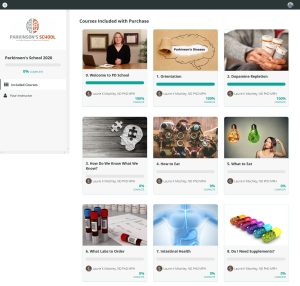
I am still working my way through the PD School 2020 lessons and will provide an update in my next post. In the meantime, stay safe and stay healthy!
World PD Day 2020
First and foremost, I hope this post finds you and your families well and hunkered down as we wait out the COVID-19 pandemic. It is an unprecedented time in our lives and I have no idea how it will all end up but I have the cleanest hands in the neighborhood!
Today, April 11th, is World Parkinson’s Day, a part of Parkinson’s Awareness month. In past years, we have celebrated with Parkinson’s Disease walks and last year we moved our Pedaling for PD class out into the lobby of the YMCA to bring attention to PD and the need for exercise. But this year we can only act alone to raise awareness about PD as we stay in to prevent COVID-19.
This month I read a new book about Parkinson’s Disease – Ending Parkinson’s Disease, A Prescription for Action. The books co-authors show that the increasing numbers of PwP has made PD the fastest growing brain disorder in the world. The number of PwP’s has doubled from 3 million to over 6 million in 25 years and they predict it will double again to over 12 million by 2040. As a result they feel PD is a world wide pandemic.
The book is co-authored by four leading doctors and advocates for PD:
Ray Dorsey MD who directs the Center for Health + Technology at the University of Rochester. He has used telemedicine to improve care for individuals with Parkinson’s disease and I have participated in several clinical trials where he has pioneered the use of technolgy particularly cell phones and live video to improve diagnoses and treatment of PD.
Todd Sherer PHD is the Chief Executive Officer of The Michael J. Fox Foundation for Parkinson’s Research. Trained as a neuroscientist, he is responsible for the Foundation’s overall scientific and fundraising direction to speed treatment breakthroughs and a cure for Parkinson’s disease.
Michael S Okun MD is Chair of Neurology at the University of Florida. He established the Movement Disorder Clinic at the University of Florida bringing together Neurologists, Speech Therapists, Occupational Therapists and Physical Therapists for a complete evaluation of the patient. You can read my blog post about our experience when we went to the University of Florida for a second opinion here.
Bastiaan R Bloem, MD, PHD is professor of neurology and the director of the Centre of Expertise for Parkinson & Movement Disorders at Radboud University Medical Centre in Nijmegen, the Netherlands. In 2004, with Dr. Marten Munneke, he created ParkinsonNet, the largest integrated-care program for Parkinson’s patients.
The authors propose a PACT to Prevent the disease, Advocate for protective policies, Care for patients, and Treat the condition with innovative therapies.
Prevent – They point out that stopping the use of chemical pesticides and solvents and recognizing the impact of head traumas would help to prevent PD and lead to a large reduction in newly diagnosed PwP world wide.
Advocate – They point out the need to educate the public about the worldwide Parkinson’s pandemic. The book discusses the campaigns to end or treat Polio, HIV, and Breast Cancer as examples.
Care – They discuss providing care for PwP’s including in home care by healthcare workers trained in caring for PD patients. They point out that care must be covered by health insurance including Medicare. In addition they discuss the need for each of us to take actions such as exercising to improve our own care. By the way, they have an excellent discussion about Pedaling for PD during the chapter about exercising to prevent and/or slow the progression of PD.
Treat – The final section deals with the need to take charge of the research process and make sure new treatments are fully funded. This would include new medications, new surgeries and improved methods of care for Parkinson’s Disease.
The book ends with a prescription for action listing 25 steps each of us can and should take to reduce the worldwide toll of this disease. The list includes banning paraquat and other harmful pesticides, eating like the Greeks, exercising, advocating for resources and policy changes, and providing reasonable pricing for PD medications.
The book is well written and includes many case studies and research references to support their plan for ending or at least slowing down the increasing number of Parkinson’s Disease diagnoses. It also lays out how to care for those of us that have already been diagnosed including supporting clinical trials that slow or reverse the progression of PD.
So, while you are home fighting off the COVID-19 pandemic, you might want to grab a copy of Ending Parkinson’s and read about the other pandemic we are fighting as PwP’s. You can find more information about the book at www.endingPD.org.
I am still working my way through the PD School 2020 lessons and will provide an update in my next post. In the meantime, stay safe and stay healthy!