• Where Does the Time Go?

    I have always heard that time flies as you get older and I guess they (whomever they are) were right. It seems like it was just a month or two ago since my 5th Anniversary  post last July.  Yet here we are 6 years since the start of my journey with Parkinson’s Disease.  Many of you have been following along for those 6 years as we became expert at researching PD, learning all we could by attending research conferences,  day long seminars, and attending the 4th World Parkinson’s Congress in Portland, OR.

    We have seen substantial progress in the past 6 years with researchers diving into the gene pool to look for ways to modify the progression, drug research that has resulted in several new drugs being approved, several clinical studies looking at re-purposing already approved drugs for use in PD, and new clinical trials involving implanting stem cells.   And don’t forget the great Sarasota experiment that resulted in our move to Sarasota, Fl and our subsequent love of tennis.   

    I am pleased to report that there have been no major changes to my symptoms during the past year.  I continue to exercise as much as possible playing tennis 3 to 5 days a week and attending the cycling for PD class twice a week. The biggest change has been the emergence of occasional dyskinesia, involuntary movements which are usually a result of the amount of medication needed to keep the symptoms at bay.   As I wrote in the last post, I seem to have figured out the right combination of extended release levadopa/carbadopa  (Rytary) , pramipexole, and regular release levadopa/carbadopa (Sinment)  which reduces my “off” time if I stay on schedule.

    If you saw me today playing tennis while the medication was working you would probably say “You don’t have PD.”  If you saw me when the medication has worn off, you would notice my limited arm movement, my limited leg movement resulting in short steps, how difficult it is to get out of a chair, and you would probably notice my lack of facial expression (the PD mask). You still might think “He doesn’t have PD” because I don’t have tremor, but I think you would agree my issues are caused by more than being 73 years old.  I feel like my progression continues to be slow and I credit exercise for keeping it that way.  I know I rarely mention the need for exercise in this blog 😀 but I will make a pitch today, find an exercise you like, and start exercising.  You might only go for a minute the first day, 2 minutes the next day and 3 minutes the 3rd day, but you will build up stamina and you will see a difference in your symptoms.

    Speaking of exercise, yesterday during our Tuesday cycling class, the management of the YMCA announced that they were closing the Sarasota YMCA’s on September 13, 2019.   Talk about a shock, we were flabbergasted!  Apparently the rumored financial mis-management finally caught up with the board and the only option was to close the buildings.  We are all looking for new alternative locations for our classes and hopefully we will have something by the 13th of September.  The high intensity exercise we get cycling has been a mainstay of my exercise program for the last 4 years and I can always tell when I miss a class or two.  Hopefully we get this worked out or I might have to take up running again or I guess I could play more tennis😎.
     

  • Welcome Summer!

    This has been a hectic, fast paced and exciting spring. So much has been going on that this is the first chance I’ve had to take some time and catch you up on what’s been happening. As long as you don’t count the times I started and dozed off in front of the screen leaving a trail of dddddddddd or some other letter across the page. 🙂

    When last we met, it was the middle of April and we had just completed our World Parkinson’s Day cycling class in the lobby of the YMCA. One of the pluses of living in Florida is everyone likes to come visit in the winter and spring before it gets too hot and humid. Another is, we like to play tennis in the winter and spring and fall (and summer!) so we kept busy for much of April playing tennis and enjoying our friends and family who visited during the month.

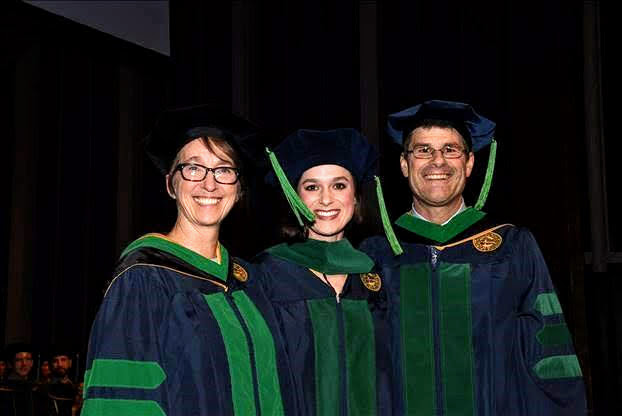
    In May we traveled to West Virginia University to attend our granddaughter Breanna’s graduation from medical school. It was an outstanding event as her parents presented her with her hood during the ceremony.

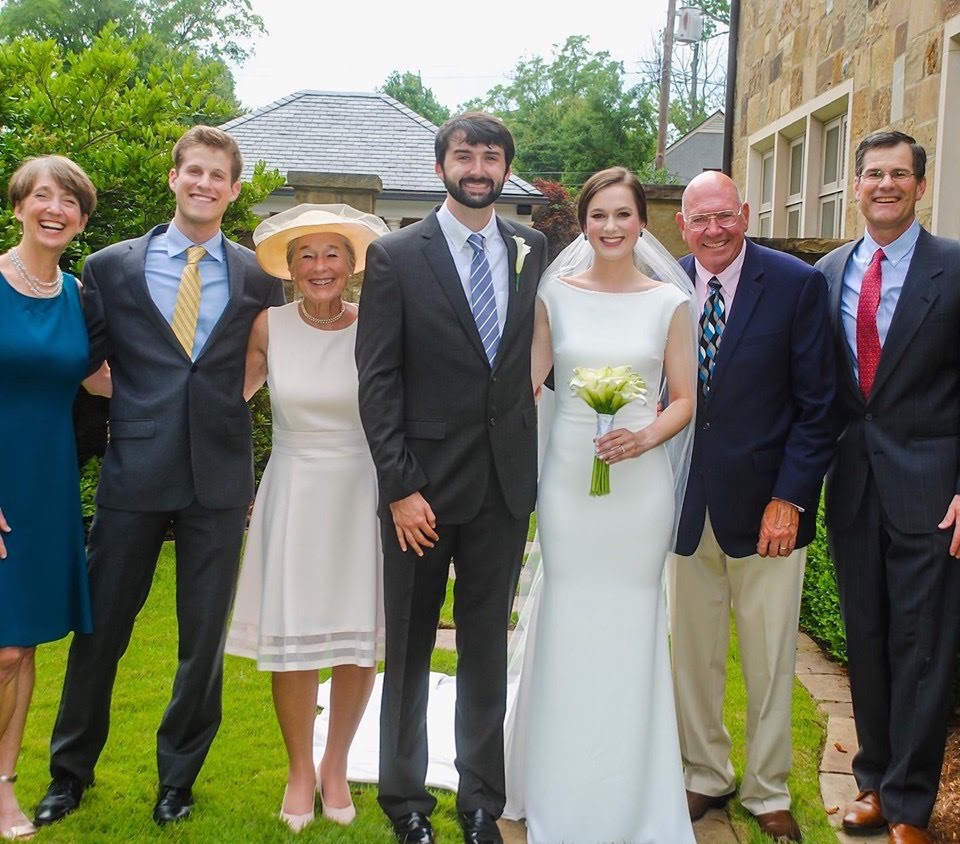
    We returned home and caught up on our tennis and cycling then in early June we traveled to Little Rock , Arkansas to attend Breanna’s wedding to fiancee Will. In between her graduation and the wedding, they had been to Italy for two weeks, purchased a home in NC where she will be a resident for the next 5 years, moved most of their belongings to the new location and found a chocolate lab puppy who will join them in a about two weeks. (Our first great grand dog!) And I thought we were busy!!

    And now it’s almost the end of June and we are gearing up to celebrate the Fourth of July with friends and family at the beach followed by a trip to Bald Head Island in North Carolina and then a trip out to Seattle to visit family.

    In between visiting, traveling and exercising I have spent many more weeks trying to determine the correct amount of Rytary and carbidopa/levodopa to take and I think I have finally hit on a combination that is working most of the time. I am taking two Rytary when I get up and then two carbidopa/levodopa 3 times a day in between with each dose accompanied by 1/2 tablet of 1 mg pramipexole and if I’m still off for whatever reason, I take an extra carbidopa/levodopa as needed. In talking with other PwP’s it seems that we all have a routine that works most of the time, and none of us want to add another med if we don’t have too so we do what we can to ‘make it work’.

    Next month will be the 6th anniversary of my diagnosis and I am as active if not more active than I was before I was diagnosed. When I go back and read some of my early posts I am certainly more active now than I was during the first year or so after diagnosis and I continue to believe that exercise helps me fight PD and slow the progression. In the past six years there have been several new medications approved along with new DBS equipment and the dopamine pump which supplies a steady amount of dopamine. And if you read the Science of Parkinson’s monthly summary (click on tab above) you will see that there continues to be a lot of interesting and promising research happening around the world. So I hope I can continue to slow my progression and benefit from some of the research results that get approved in the next 6 years!

  • Our World Parkinson’s Day Event

    As I mentioned in my last post, yesterday we moved our spin bikes out of the classroom and into the lobby of the YMCA and held our Pedaling for Parkinson’s class in the lobby . We had a good turnout of cyclists and attracted a lot of attention from Y members and visitors who stopped to watch us as class progressed. A member of the Neuro Challenge Foundation staff was there to answer questions and provide literature about PD and the foundation. And a reporter from the local news station, Suncoast News Network, was there and filmed us for a news report that was broadcast that evening. A video of the broadcast is below. A big thank you goes out to the YMCA staff for allowing us to hold our class in the lobby and to our instructors Kathy and Kelly for always challenging us to keep on pedaling. And kudos to all of the riders who participated in the event to bring awareness to PD.

    Parkinson’s Patients Peddle to Raise Awareness by Jenna Brew, Suncoast News Network

    Oh, you may have noticed a familiar face being interviewed towards the end of the video, yep that’s me making my TV debut. I’m pretty sure the offers for a starring role will be rolling in any day now 🙂

Pedaling with Parkinson’s

As part of our stay here in Florida, we became temporary members at a local Gym that provides PwP specific classes along with all the other amenities of a large gym.  One of the classes they offer is Pedaling with Parkinson’s, a twice a week spin class specificly designed for PwP’s.  The objective of the session is to cycle for 40 minutes, keeping your heart rate between 60% – 80% of your MHR (maximum heart rate), and keeping the cadence (RPM) between 80 and 90 RPM per minute.

In order to take the class, I had an hour long evaluation that covered, among many things, medical conditions other than PD, what PD symptoms I had, and how my balance was – almost made the 30 seconds standing on one foot! Then, after taking my resting heart rate and blood pressure, I spent 20 minutes on the spin bike, upping the resistance until I couldn’t maintain 80 RPM for a minute, which provided my MHR.

I managed to pass the tests so last Friday I joined a full class of 20+ PwP’s for my first forced march on a bike!  After adjusting the bike, putting on the heart rate monitor and doing a light warm up spin (you know in the 60 – 80 RPM range) the instructor cranked up the music and off we went, upping the resistance while maintaining the cadence at 80 – 90 RPM for what seemed to be forever. OK maybe it wasn’t forever but it was a solid 40 minute workout, with brief slow downs for hydration before the next song came on.  All of our data was captured on a computer which then projected our heart rate and the percent of MHR up on a screen in front of the room.  In addition, the bike was equipped with a device showing our RPM, heart rate and % of MHR.

This program is based on research by Jay Alberts, PhD, at the Cleveland Clinic and a demonstration study by the Neuro Challenge Foundation here in Sarasota which have yielded promising preliminary scientific and anecdotal results.  The studies have indicated that doing this twice a week helps create new pathways (neuroplasticity) in the brain and participants have reported a reduction in tremors, better balance and gait, regained sense of smell, and increased energy. I have been interested in doing this for some time and I’m glad I get the opportunity to participate while here as they also offer this class at the YMCA in Knoxville if I want to continue when I get home.

The Neuro Challenge Foundation also sponsors the three dance for PD classes we are attending while here along with many other activities for PwP and Care Partners.  They provide a Parkinson Disease Resource Guide and offer a one on one Care Advisor Program to help PD Patients find the best treatment and support options available.  An excellent resource for PwP in the Sarasota area and one of the reasons we like to come to this area.  Speaking of dance classes, our Let Your Yoga Dance for PD class made the local paper, you can view the article here.  We have a good time in all three classes and it certainly helps keep me flexible.

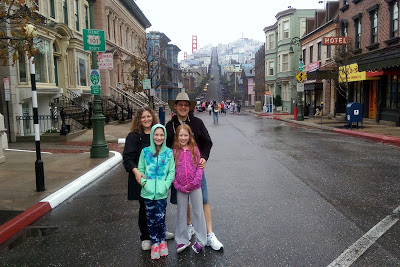
Oh, did I mention we caught up with Dale, Monica and grand daughters Angelina and Ariana in San Francisco?  OK, maybe we were at Disney World’s Hollywood Studios and took advantage of the set.  We had a great time with them in Disney World and here at the beach.

We continue to enjoy our beach time in between dance classes and time at the gym and I can’t believe our time here is half over already!

Don’t forget to sign up for MJF Trial Finder by clicking on that large orange button on the top right and then you might as well join Fox Insight by clicking on the logo to your right!  Thanks.

“It does not matter how slowly you go as long as you do not stop.” – Confucius


Pedaling with Parkinson’s

As part of our stay here in Florida, we became temporary members at a local Gym that provides PwP specific classes along with all the other amenities of a large gym.  One of the classes they offer is Pedaling with Parkinson’s, a twice a week spin class specificly designed for PwP’s.  The objective of the session is to cycle for 40 minutes, keeping your heart rate between 60% – 80% of your MHR (maximum heart rate), and keeping the cadence (RPM) between 80 and 90 RPM per minute.

In order to take the class, I had an hour long evaluation that covered, among many things, medical conditions other than PD, what PD symptoms I had, and how my balance was – almost made the 30 seconds standing on one foot! Then, after taking my resting heart rate and blood pressure, I spent 20 minutes on the spin bike, upping the resistance until I couldn’t maintain 80 RPM for a minute, which provided my MHR.

I managed to pass the tests so last Friday I joined a full class of 20+ PwP’s for my first forced march on a bike!  After adjusting the bike, putting on the heart rate monitor and doing a light warm up spin (you know in the 60 – 80 RPM range) the instructor cranked up the music and off we went, upping the resistance while maintaining the cadence at 80 – 90 RPM for what seemed to be forever. OK maybe it wasn’t forever but it was a solid 40 minute workout, with brief slow downs for hydration before the next song came on.  All of our data was captured on a computer which then projected our heart rate and the percent of MHR up on a screen in front of the room.  In addition, the bike was equipped with a device showing our RPM, heart rate and % of MHR.

This program is based on research by Jay Alberts, PhD, at the Cleveland Clinic and a demonstration study by the Neuro Challenge Foundation here in Sarasota which have yielded promising preliminary scientific and anecdotal results.  The studies have indicated that doing this twice a week helps create new pathways (neuroplasticity) in the brain and participants have reported a reduction in tremors, better balance and gait, regained sense of smell, and increased energy. I have been interested in doing this for some time and I’m glad I get the opportunity to participate while here as they also offer this class at the YMCA in Knoxville if I want to continue when I get home.

The Neuro Challenge Foundation also sponsors the three dance for PD classes we are attending while here along with many other activities for PwP and Care Partners.  They provide a Parkinson Disease Resource Guide and offer a one on one Care Advisor Program to help PD Patients find the best treatment and support options available.  An excellent resource for PwP in the Sarasota area and one of the reasons we like to come to this area.  Speaking of dance classes, our Let Your Yoga Dance for PD class made the local paper, you can view the article here.  We have a good time in all three classes and it certainly helps keep me flexible.

Oh, did I mention we caught up with Dale, Monica and grand daughters Angelina and Ariana in San Francisco?  OK, maybe we were at Disney World’s Hollywood Studios and took advantage of the set.  We had a great time with them in Disney World and here at the beach.

We continue to enjoy our beach time in between dance classes and time at the gym and I can’t believe our time here is half over already!

Don’t forget to sign up for MJF Trial Finder by clicking on that large orange button on the top right and then you might as well join Fox Insight by clicking on the logo to your right!  Thanks.

“It does not matter how slowly you go as long as you do not stop.” – Confucius


Tag: Parkinson’s Disease

  • Pedaling with Parkinson’s

    Pedaling with Parkinson’s

    As part of our stay here in Florida, we became temporary members at a local Gym that provides PwP specific classes along with all the other amenities of a large gym.  One of the classes they offer is Pedaling with Parkinson’s, a twice a week spin class specificly designed for PwP’s.  The objective of the session is to cycle for 40 minutes, keeping your heart rate between 60% – 80% of your MHR (maximum heart rate), and keeping the cadence (RPM) between 80 and 90 RPM per minute.

    In order to take the class, I had an hour long evaluation that covered, among many things, medical conditions other than PD, what PD symptoms I had, and how my balance was – almost made the 30 seconds standing on one foot! Then, after taking my resting heart rate and blood pressure, I spent 20 minutes on the spin bike, upping the resistance until I couldn’t maintain 80 RPM for a minute, which provided my MHR.

    I managed to pass the tests so last Friday I joined a full class of 20+ PwP’s for my first forced march on a bike!  After adjusting the bike, putting on the heart rate monitor and doing a light warm up spin (you know in the 60 – 80 RPM range) the instructor cranked up the music and off we went, upping the resistance while maintaining the cadence at 80 – 90 RPM for what seemed to be forever. OK maybe it wasn’t forever but it was a solid 40 minute workout, with brief slow downs for hydration before the next song came on.  All of our data was captured on a computer which then projected our heart rate and the percent of MHR up on a screen in front of the room.  In addition, the bike was equipped with a device showing our RPM, heart rate and % of MHR.

    This program is based on research by Jay Alberts, PhD, at the Cleveland Clinic and a demonstration study by the Neuro Challenge Foundation here in Sarasota which have yielded promising preliminary scientific and anecdotal results.  The studies have indicated that doing this twice a week helps create new pathways (neuroplasticity) in the brain and participants have reported a reduction in tremors, better balance and gait, regained sense of smell, and increased energy. I have been interested in doing this for some time and I’m glad I get the opportunity to participate while here as they also offer this class at the YMCA in Knoxville if I want to continue when I get home.

    The Neuro Challenge Foundation also sponsors the three dance for PD classes we are attending while here along with many other activities for PwP and Care Partners.  They provide a Parkinson Disease Resource Guide and offer a one on one Care Advisor Program to help PD Patients find the best treatment and support options available.  An excellent resource for PwP in the Sarasota area and one of the reasons we like to come to this area.  Speaking of dance classes, our Let Your Yoga Dance for PD class made the local paper, you can view the article here.  We have a good time in all three classes and it certainly helps keep me flexible.

    Oh, did I mention we caught up with Dale, Monica and grand daughters Angelina and Ariana in San Francisco?  OK, maybe we were at Disney World’s Hollywood Studios and took advantage of the set.  We had a great time with them in Disney World and here at the beach.

    We continue to enjoy our beach time in between dance classes and time at the gym and I can’t believe our time here is half over already!

    Don’t forget to sign up for MJF Trial Finder by clicking on that large orange button on the top right and then you might as well join Fox Insight by clicking on the logo to your right!  Thanks.

    “It does not matter how slowly you go as long as you do not stop.” – Confucius


  • It’s a New Year…

    and it’s way past time for a catch up blog post. I think the last post of substance was about Giving Tuesday at the end of November, 2015! So this is my attempt to condense a couple of months of activity into one post. Not long after the Giving Tuesday post, we made an unscheduled trip to Traverse City, MI to help out Mara’s sister with her used book store. We have no retail experience and it’s been over ten years since I’ve worked a 40+ hour shift but we had a great time taking care of business. If you are in the Traverse City area, be sure and stop in at her store The Bookie Joint downtown just off Front Street. (yep, a shameless plug!)

    We got home just in time to get ready for Christmas and enjoyed the holidays with our family and then it was time to start getting ready for THE BEACH! We arrived last Saturday and were awakened at 3am Sunday morning by the sounds of a tornado (I’ll be darned if it didn’t sound just like a train).  Luckily no one in our complex was injured but a lot of the units had windows and screens damaged and a lot of cars suffered broken glass and other damage.  We hadn’t planned on being part of the effort to prove the theory of global warning but we are thankful that no one was hurt and our unit and car were not damaged.

    On the Parkinson’s front, I was appointed webmaster for the East Tennessee Parkinson’s Support Group and spent a lot of free time during December learning WordPress and upgrading the site to the latest version.  When that wrapped up early in January I spent my free time updating the Tennessee Parkinson’s Disease Resource site with maps and adding new information.

    Somehow I also managed to take an exercise holiday and I began to notice my symptoms were getting worse, particularly the brady kinesia (ridgity).  Since we arrived in Florida, I have been walking at least an hour a day and we have signed up for two Parkinson’s dance classes  We are also planning to sign up for additional exercise classes at the Neuro Challenge Institute, a great resource for Parkinson’s Patients in the greater Sarasota area.  I am already noticing improvement which once again proves how important exercise is for PWP’s!  

    We also signed up for a weekly Let Your Yoga Dance class. We were introduced to Let Your Yoga Dance while at the Kripalu retreat in October 2013 and this class reunited us with instructor/founder Megha and Joel and Melissa whom we first met at the retreat and meet up with every year while in Sarasota.  Our first class was yesterday and Megha had us doing deep breathing exercises, stretching and dancing in no time. It is a great class that not only provides exercise but brings ‘healing through joy’. 

    Coming up we will attend the Neuro Challenge Insitute annual Parkinson’s Symposium on Saturday where one of the topics to be covered is the Tasigna trial conducted at Georgetown University.  Tasigna is a leukemia drug that appears to stop or reverse some of the PD symptoms during a small test involving 12 Parkinson’s patients.  I am looking forward to hearing more about the first trial and the results and will provide more information in the next post.

    So there you have it, a short version of a very busy couple of months.  Oh, did I mention I am still wearing my smartwatch and providing data for the Fox Insight Trial?  If you haven’t signed up you can do it here, and don’t forget to also sign up for Fox Trial Finder at the same time and join over 52,000 of us who have already signed up!


    “It does not matter how slowly you go as long as you do not stop.” – Confucius


  • Giving Tuesday is Almost Here!

    Tuesday, December 1st is Giving Tuesday. Black Friday is over and Cyber Monday is almost over and Tuesday will be a great opportunity to take some (or all) of the money you saved this weekend and give back by making a donation to a Parkinson’s Disease organization or another cause of your choice. As in past years, many charitable organizations have a matching plan that will double your Giving Tuesday donation for double the benefit.

    In case you need a little inspiration, I am reposting the following article “What is a Parkie? And Why are They so Expensive?“.  This article was written by Alan Zimmerman vice president of the East Tennessee Parkinson’s Support Group and posted on their website,  PK Hope is Alive . Alan is a strong and active advocate for Parkinson’s research and education. In addition to being Vice President of the group, he is the Assistant Tennessee State Director for the Parkinson’s Action Network (PAN) and a member of the Parkinson’s Disease Foundation (PDF) People with Parkinson’s Advisory Council.

    Take some time on Tuesday and support the cause of your choice,  There is a lot of exciting news on the research front and our donations can make a difference!  Happy Holidays!!


    “It does not matter how slowly you go as long as you do not stop.” – Confucius


    WHAT IS A PARKIE? AND WHY ARE THEY SO EXPENSIVE?
    by Alan Zimmerman
     
    Parkies are expensive devils.  How does $25 Billion per year in the US sound to you?  Not only that,we discover another 60,000 Parkies each year, right here in good old America.  That number that is guaranteed to rise.  And, each Parkie spends about $2500 per year trying to be less Parkie with an assortment of medications and untold more on supplements.
    So, what then is a Parkie?  It is what people with Parkinson’s disease call each other.  Yep, the term is pretty much reserved for those in the Parkie club.  They would rather be known by everyone else as people with Parkinson’s (PWP).
    I know that you know someone who is a PWP.  You may even have a relative with PD.  You have seen them taking short steps and all bent over and very stiff and slow, or maybe they are using a walker to get around or perhaps they shake uncontrollably.  Maybe you can’t hear or understand them when they talk.  Perhaps you, nor they can read their handwriting.  The list goes on and on.
    Who gets this disease?  Men are slightly more likely and most people are in their 60’s when diagnosed.  But, about one in ten are 45 or under.  By the time your symptoms are bad enough to be diagnosed, one has already lost more the 60% of their dopamine.  You see, that marvelous thing called a brain compensates until it no longer can.  Unfortunately, that is not the blessing it seems to be.  As more interventions are developed, the sooner the diagnosis, the better.
    Wait!  We have new terms: diagnosis and dopamine.
    Let’s take “diagnosis” first because most everyone has had at least one of those.  In the case of Parkinson’s there is no definitive way of diagnosing except by physical exam.  And, it really needs to be done by a neurologist who specializes in movement disorders.  There is no blood test or scan that will determine for sure that the monster called PD has attacked.
    What’s “dopamine?”  It is a chemical found in the brain.  What does it do?  Lots of things that we know about and probably some yet to be discovered.  For one, it is a communicator.  Somehow it signals the muscles to do whatever the brain tells them to do.  It also has something to do with mood, pleasure, depression and many other important functions.
    What causes this PD thing?  Nobody knows for sure but most scientists believe it is probably a combination of genetics and something in the environment, like heavy metals, toxins, or pesticides that trigger the beginning of the disease.  That is pretty much where science is.  OK, so where does it start?  Nobody is sure where exactly but some of the latest thinking is that it starts in the gut or maybe even the intestines.
    So, bottom line, what is the cure?  There isn’t one.  It just gets worse over time as more brain cells die.  OK then, what is the treatment?  Mostly, at this stage in modern medicine, only symptoms can be treated.  A few things may slow it down like exercise programs.
    We also have this thing called Deep Brain Stimulation (DBS).  Hold on, what’s that?  It may scare you if I tell you but here goes.  DBS is where a PWP has one or preferably two holes drilled in the scull.  Then you insert electrodes into certain places in the brain.  Then, you attach all that to a battery which is eventually buried into your upper chest.  Oh, I forgot to tell you.  Usually the patient is awake when those electrodes are being put in place.  Why?  So that the neurosurgeon can get feedback from the PWP.
    So, I guess we need more research.  There is a bunch going on world-wide, but we could always use more.  Researchers eat and have families and require laboratories.  What that means is that research has a price tag.  What a price tag means is that more donations are required.
    What else is needed?  More movement specialist physicians for one.  There are not enough now and certainly too few going to school while the Parkie population increases.  So, we need to encourage doctors to devote an extra two years of their life learning the intricacies of movement.  Guess what?  That too carries a pretty hefty price tag.  So, we need more scholarships which means we need more donations yet again.
    So, let’s review.  People with Parkinson’s are growing in numbers rapidly.  The disease is progressive and degenerative.  So far, we can pretty much treat the symptoms only.  But, through massive research, we believe that disease altering therapies are going to become a reality pretty soon.  What is pretty soon?  Maybe 5-10 years.  But, that only happens with support for research, i.e. donations.