I started ‘brain training’ with Lumosity last fall and usually play five games a day whenever possible. If you aren’t familiar with Lumosity, they provide cognitive training exercises that teach neuroplasticity, that is training the brain to use new pathways to complete a task. Cognitive training has blossomed in the past few years and since some of my neural pathways are deteriorating, I thought Lumosity would be an interesting test and might help me build those new paths.
The Lumosity training works to improve five areas – memory, flexibility, problem solving, attention and speed – all improvements I can use! After every five game session you get an overall score called the Lumosity Performance Index or LPI which is an average of the five areas and hopefully goes up each day (I wish). But enough of the background, if you want more info, check out their website.
I have found that playing the brain games with PD can be a challenge, particularly the flexibility and speed games that usually require the use of the arrow keys on my laptop to select the right answer. I have noticed that I can visualize the correct move but making my fingers press the right key is another thing altogether. As I learned from the presentation by Kaitlyn Roland at the Kripalu session, one of the problems with a lack of dopamine is the brain sends the correct command but it gets scrambled and doesn’t follow the correct pathway which results in the wrong action being taken which can result in a fall, freezing in place or, it appears, pressing the wrong key.
So I am hopeful that by doing the games every day I am creating those new neural pathways and my LPI score will reflect the improvement. But sometimes I seem to be stuck with the old paths and my LPI chart ends up looking like this one for the last four weeks, up and down. Such is life with Parkinson’s 🙂
The big Parkinson’s news of the last couple of weeks is the publication of a study that cinnamon might stop the progression of Parkinson’s Disease! I figure this means I should be baking and consuming my famous (in some circles) Gram’s Pecan Rolls so named because the recipe is from my daughter in law Monica’s Gram and it is full of cinnamon. Of course the study was conducted on mice so I don’t know how many rolls I need to eat daily but do know what the effect would be on my weight! Guess I’ll wait for more information before getting the baking equipment out but I wonder if my LPI would go up? Sounds like a clinical study in the making!
We had a great 4th of July visit with son Ryan and his wife Sarah and their son Julian and his half brother Trysten. In addition, grandson Jake and granddaughter McKenna and her friend Katie also joined us for the holiday weekend so we had a houseful. The kids enjoyed tubing on the lake and swimming off the dock, and we all enjoyed taking the boat down to watch the fireworks go off over the lake. We even managed to load the tube with all five kids for some fun on the lake. Again some fishing and paddle boarding took place along with watching the World Cup games.
Next week it will be one year since my PD diagnosis and a lot has happened in the space of the year, most of which I have managed to chronicle in this blog. Once again I thank you all for sticking with me on this journey, your support means a lot to me.
BTW, if you are a tweeter, follow me on twitter by clicking on the link on the right below my profile.
I am writing this from the deck of a beautiful home overlooking the Atlantic Ocean on Bald Head Island, NC. Yep, at the beach again!! More about how we got here later in this post.
I have looked at several more clinical trials but again find that I don’t qualify because I am already on medication. It seems to me that communication between Movement Disorder Specialists (MDS) or Neurologists and clinical trial operators could increase trial participants. If the Doctors were aware of the trials being conducted nearby, they could then offer their newly diagnosed patients the opportunity to particpate in the trial before they prescribed a medications. Of course another issue is travel, most of the trials that I have tried to join are at least 200 miles away and the travel costs are usually not covered. In her latest blog post, Soania Mathur MD states “…close to 85% of all clinical trials are delayed due to recruitment difficulties and a shocking 30% fail to recruit a single subject.” The post goes on to discuss both the logistical and the lack of knowledge issues I have discussed above. The Michael J Fox Trial Finder website does a great job of listing all of the trials in my home radius of 300 miles and they notify me if a new one is added that meets the criteria but the newly diagnosed need to know where to look. Perhaps one or more of the National organizations can develop a simple brochure that can be supplied to MDS and Neurologists for them to hand out or make available to patients. It might be a start?
I was asked this week to be a PatientsLikeMe Research Ambassador. PatientsLikeMe is an online support group I belong to and I had applied to be a member of a research advisory committee they were forming. While I wasn’t selected for the advisory group I was asked to be a Research Ambassador. Per the email ..”Like the Team of Advisors, our Research Ambassadors are being asked to commit to a program that’s designed to put you in the driver’s seat of making research better.” As an Ambassador, I will get special communications each month for the rest of the year about new research initiatives, information about data being collected and how it will be used, and use my blog and other social avenues to share this information with the Parkinson’s community. I have participated in a couple of their research projects already, including the one where I did the voice test over the phone to see if they can track the progress of my Parkinson’s. Sounds interesting and I am looking forward to participating.
We had a great visit with my daughter Holly and grandchildren Charlie and Kayla. The weather was great until the last evening so we got in a lot of boating, tubing, swimming, fishing and stand up paddle boarding along with side trips to the Ripley’s Believe It or Not museum and a couple of rounds of mini golf.
Kayla turned out to be the fisherperson extraordinaire hooking a couple of nice catfish and a bunch of sunfish from the dock. Charlie loved being on the water and riding the tube. Holly and Kayla both enjoyed stand up paddle boarding so much the first time, they went back for more before leaving for home. It was a great visit and a good time was had by all.
We are enjoying our time at the beach in Bald Head Island. The island is reachable by ferry from Southport, NC and once you are here, you travel by foot, bike or golf cart. We have been lucky to spend a week here for the past several summers with my stepson David and his wife Shelly and the two grand kids Breanna and Garrett. This year Breanna is in MN so this is the first time we have been here without her. Garrett always brings along a friend or two, this year he brought along 4 high school buddies and they are having a blast. Dave and Shelly’s friends Mario and Missy have also joined us for the week. It is a great place to just relax, read books, take long walks on the beach and watch the World Cup. I am trying to catch up with all of the magazines I haven’t read since we returned from Florida in early March and produce this blog post. Looks like the blog post will make it, we’ll see about the magazines.
Our friends Mary Ann and Don live nearby in Wilmington, NC so they came over for a day and we had a great time, we hadn’t seen them for almost 2 years so we had a lot of catching up to do. We enjoyed a nice lunch with them and a couple of ‘slow’ rides around the island as one of our golf carts is not super speedy. 🙂
Next up is a visit from my son Ryan and his wife Sarah and grandson Julian and his half brother Trysten for the Fourth of July, look for more fun on the lake in the next post.
May seems to be going has gone by awfully quickly, here it is Memorial Day June 1 and it seems like we just got home from our West Coast tour last week, not 5 weeks ago. It’s been a busy time since we returned including Doctor appointments (annual physicals), catching up our volunteer work for Project Linus and getting ready for Spring.
Spring did finally arrive (more or less) and we took the pontoon out for the first time not long after we got home and it was great to be able to get back out on the water. We also started getting ready for our oldest grandson Garrett’s high school graduation including adding a few hanging plants to the yard and having Mara’s son Darrin help with painting, yard work, and launching the pedal boat before our visitors arrived. Our youngest grandchildren, Angelina and Ariana, arrived from Seattle (oh they did travel with their parents Dale and Monica) a few days before the big event.
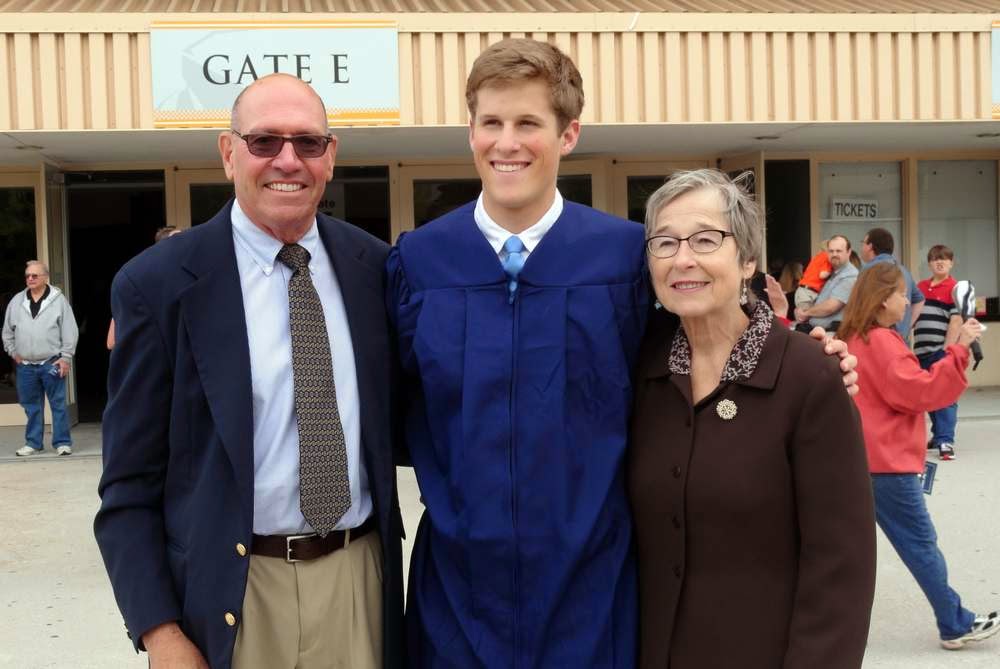
We are very proud of Garrett – he was a varsity soccer player, a National Merit scholarship winner and a diploma candidate in the International Baccalaureate program. After visiting many college campuses over the last couple of years he has decided to join his sister Breanna and attend Rhodes College in Memphis where he will also play soccer for the Lynx.
We had a great time with our visitors. In addition to attending the graduation and subsequent festivities, we all spent a day at Dollywood, Dolly Parton’s amusement park in Pigeon Forge, near Smoky Mountains National Park. The weather wasn’t perfect but we didn’t let the rain dampen our spirits and a good time was had by all.
We had a day of great weather for being on the lake and doing some tubing and some fishing. They left before Memorial Day and we spent a quiet (and wet) holiday weekend getting in our walks and catching up on a few to-dos including finishing my Introduction to Genetics course. I really enjoyed the course, my first online learning experience and I would recommend it if you have an interest in genetics.
Next up, my daughter Holly and grandchildren Charlie and Kayla arrive from Colorado Springs on Tuesday and I expect more tubing, fishing and maybe another trip to Dollywood will occur during their visit.
On the Parkinson’s front, I am still working thinking about adding a page with a list of the blogs I follow but in the meantime here is a list of Parkinson’s Disease blogs posted on The Bachmann-Strauss Dystonia and Parkinson Foundation website. I am honored to be on their list which also includes many of the blogs that I follow and has pointed me to some new ones to add to my list.
And I’m back! I noticed that I didn’t mention anything in the last post about how my buddy Parkinson’s and I are getting along. Things are pretty much stable, still some arm stiffness and shuffling when I walk and the occasional balance problem. I don’t have the sticky feet problem nearly as often nor the internal tremors so, all in all, things are OK.
As I have noted before, I follow many other blogs, websites, and Twitter accounts related to Parkinson’s, probably close to 50 if I took the time to count them all. I have been planning to add a page with the list of who I follow to this blog and maybe that will happen one of these days soon, but remember, apathy is a non-motor symptom so don’t hold your breath. 🙂
One of the blogs I follow is Tremors in the Universe written by Robert Baittie. In a recent post, Chapter 36 Whistle while you twerk, he talks about another symptom of PD, micrographia and from there he… well here, I’ll let you read it yourself picking up where he defines micrographia:
“The symptom as it appears in association with Parkinson’s disease is called micrographia, and in handwriting or penmanship is characterized by abnormally small, cramped handwriting and/or the progression to continually smaller handwriting. It’s cause, according to the National Parkinson’s Foundation is attributed to a common feature of PD which is a slowing of movement, and feelings of muscle stiffness in the hands and fingers. Loss of automatic motion also affects the easy, flowing motion of handwriting. This can impact even simple writing taskssuch as signing your name.”
“Which started me thinking.”
“Parkinson’s disease is named after the English doctor James Parkinson, who published the first detailed description in An Essay on the Shaking Palsy in 1817.”
“In 1817”.
“Might there be any signatures of record prior to 1817 that show signs of a typical Parkinson’s style of writing?”
“Of what importance was that to me? Well my entire attitude around my diagnosis of Parkinson’s has been about succeeding with the disease and having and maintaining a positive attitude towards dealing with it. I was curious if there might be individuals who had continued to achieve and possibly even made a mark in history while in the midst of dealing with PD? At a time when they didn’t have today’s technology, support and treatments. Obviously this was all pure speculation because prior to 1817 it was not classified or known as Parkinson’s. But I was curious none the less.”
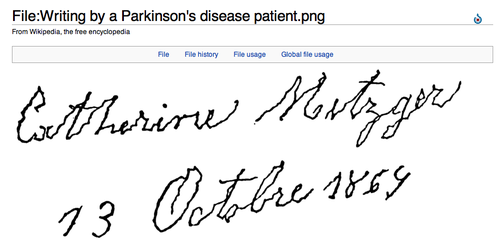
“The first thing I did was to Google micrographia thinking I might find a visual example of the malady that I could use for comparison to any earlier documents I might come across. And sure enough, in the Wikipedia Encyclopedia a writing example of a Parkinson’s patient.” “The next step was to begin searching documents prior to 1817 that might offer a similar writing style”.
“Now I was not going to go about this by pure happenstance, on the contrary, I had a hunch and I had definite place in mind to start. There was one document in particular I wanted to take a look at. And sure enough my hunch or maybe I should say my “intuition” was correct.”
Stephen Hopkins
“Here was my individual of notoriety that I felt had that characteristic signature at a time when the flourish of stylized and ornate signatures and penmanship were the art form of the day.”
“Here was a man among men. Stephen Hopkins. Born in 1707 and died in 1785 at the age of 78. He came from a prominent Rhode Island family and most definitely left his mark upon a nation. Not only did my initial examination of the document serve to heighten my belief, but further readings of his biography removed all doubt. His own admission was proof enough for me.”
“In the summer of 1776, while holding his right hand with his left, saying, “although my hand trembles, my heart does not” Stephen Hopkins, a Rhode Island delegate to the First Continental Congress, signed the Declaration of Independence.”
“It gave me tremendous pause to sit and look at that Declaration of Independence and those signatures and to think about the thoughts that must have been going through Stephen Hopkins mind. Not only could I imagine he had a sense of uncertainty and fear for what the future held for our new country at that time, but he was simultaneously dealing with the uncertainty of and concern for his own health. He held the same questions in his mind then about his health, that millions still hold to this day. What is causing this? What can be done?”
“And as I reread those simple words of Stephen Hopkins, a number of thoughts came to mind. First, I felt a tremendous amount of respect for the man because he was not afraid to share with his friends and colleagues the disease that afflicted him. Especially at a time when there was no explanation he could offer for what ailed him. He openly called attention to and acknowledged his tremor and in doing so said he was not ashamed of it. Second was that he had not allowed his tremor or the disease to limit him. He had continued on with his passion for his work. But most profoundly to me was the double meaning I took from the words as a whole. While obviously in one context he is referring to our young nation and “though his hand trembles” while signing this Declaration of Independence “his heart does not” because he believes this to be the right direction for his country, the other context it speaks to for me is the disease of Parkinson’s itself. The words make the analogy of how I have felt all along. “Although my hand trembles, my heart does not.” It’s that strange sense of the positive and knowing that although I have been diagnosed with Parkinson’s, everything I feel in my heart tells me there is nothing to fear and I will be alright. That I can and will deal with whatever it brings me.”
“Over 230 years later since the documents signing technology is most definitely moving at a rapid pace, and the research being done toward finding a cure for Parkinson’s is as well. But to continue that work and to hasten the success, additional funding is always needed. Volunteers and Foundations continue to spearhead the vast majority of the fundraising efforts but more needs to be done.”
“Given that, I find it extremely ironic that this would be the example of the signature I would find. A statesmen, a member of the First Continental Congress. Because additional support and funding from our government is what is needed to keep progress moving forward and ultimately finding a cure. And so I would like to ask everyone reading this to take the opportunity to write your Congressman with a steady hand to request that they show the heart of our founding fathers and support increased funding for Parkinson’s research. (emphasis added)
Reblog it. ReTweet it. Do it for your self. Or someone you love.
To find out what prompted Robert to research micrographia, read the complete post of Chapter 36 here. I think you will find it interesting and I highly recommend reading some or all of his other ‘Chapters’.
What a great statement “although my hand tremors, my heart does not” and as the Michael J Fox Foundation says “Our challenges don’t define us. Our actions do” We can and will deal with whatever Parkinson’s throws at us on our way to finding a cure.
I also agree that we need to continue to urge Congress to support increased funding for Parkinson’s research. In that vein,the Parkinson’s Action Network (PAN) is sponsoring a Parkinson’s Day of Action on February 26th. They ask that you contact your Representatives and ask for their support. They have provided information here on how to contact your representatives, some sample statements you can use and links to why we need more funding for research. I urge you to join me and PAN on Wednesday, February 26th and contact your Congressional Representatives.
As I write this post, we are watching it snow as we are under another winter storm warning for the next couple of days, just hoping it clears up here and in Atlanta by Friday so we can start our trip to what I hope is a warm Florida. We are looking forward to the trip and a chance to meet up with a couple that we met during the Kripalu retreat. ‘See’ you next week.
And I’m back! I noticed that I didn’t mention anything in the last post about how my buddy Parkinson’s and I are getting along. Things are pretty much stable, still some arm stiffness and shuffling when I walk and the occasional balance problem. I don’t have the sticky feet problem nearly as often nor the internal tremors so, all in all, things are OK.
As I have noted before, I follow many other blogs, websites, and Twitter accounts related to Parkinson’s, probably close to 50 if I took the time to count them all. I have been planning to add a page with the list of who I follow to this blog and maybe that will happen one of these days soon, but remember, apathy is a non-motor symptom so don’t hold your breath. 🙂
One of the blogs I follow is Tremors in the Universe written by Robert Baittie. In a recent post, Chapter 36 Whistle while you twerk, he talks about another symptom of PD, micrographia and from there he… well here, I’ll let you read it yourself picking up where he defines micrographia:
“The symptom as it appears in association with Parkinson’s disease is called micrographia, and in handwriting or penmanship is characterized by abnormally small, cramped handwriting and/or the progression to continually smaller handwriting. It’s cause, according to the National Parkinson’s Foundation is attributed to a common feature of PD which is a slowing of movement, and feelings of muscle stiffness in the hands and fingers. Loss of automatic motion also affects the easy, flowing motion of handwriting. This can impact even simple writing taskssuch as signing your name.”
“Which started me thinking.”
“Parkinson’s disease is named after the English doctor James Parkinson, who published the first detailed description in An Essay on the Shaking Palsy in 1817.”
“In 1817”.
“Might there be any signatures of record prior to 1817 that show signs of a typical Parkinson’s style of writing?”
“Of what importance was that to me? Well my entire attitude around my diagnosis of Parkinson’s has been about succeeding with the disease and having and maintaining a positive attitude towards dealing with it. I was curious if there might be individuals who had continued to achieve and possibly even made a mark in history while in the midst of dealing with PD? At a time when they didn’t have today’s technology, support and treatments. Obviously this was all pure speculation because prior to 1817 it was not classified or known as Parkinson’s. But I was curious none the less.”
“The first thing I did was to Google micrographia thinking I might find a visual example of the malady that I could use for comparison to any earlier documents I might come across. And sure enough, in the Wikipedia Encyclopedia a writing example of a Parkinson’s patient.” “The next step was to begin searching documents prior to 1817 that might offer a similar writing style”.
“Now I was not going to go about this by pure happenstance, on the contrary, I had a hunch and I had definite place in mind to start. There was one document in particular I wanted to take a look at. And sure enough my hunch or maybe I should say my “intuition” was correct.”
Stephen Hopkins
“Here was my individual of notoriety that I felt had that characteristic signature at a time when the flourish of stylized and ornate signatures and penmanship were the art form of the day.”
“Here was a man among men. Stephen Hopkins. Born in 1707 and died in 1785 at the age of 78. He came from a prominent Rhode Island family and most definitely left his mark upon a nation. Not only did my initial examination of the document serve to heighten my belief, but further readings of his biography removed all doubt. His own admission was proof enough for me.”
“In the summer of 1776, while holding his right hand with his left, saying, “although my hand trembles, my heart does not” Stephen Hopkins, a Rhode Island delegate to the First Continental Congress, signed the Declaration of Independence.”
“It gave me tremendous pause to sit and look at that Declaration of Independence and those signatures and to think about the thoughts that must have been going through Stephen Hopkins mind. Not only could I imagine he had a sense of uncertainty and fear for what the future held for our new country at that time, but he was simultaneously dealing with the uncertainty of and concern for his own health. He held the same questions in his mind then about his health, that millions still hold to this day. What is causing this? What can be done?”
“And as I reread those simple words of Stephen Hopkins, a number of thoughts came to mind. First, I felt a tremendous amount of respect for the man because he was not afraid to share with his friends and colleagues the disease that afflicted him. Especially at a time when there was no explanation he could offer for what ailed him. He openly called attention to and acknowledged his tremor and in doing so said he was not ashamed of it. Second was that he had not allowed his tremor or the disease to limit him. He had continued on with his passion for his work. But most profoundly to me was the double meaning I took from the words as a whole. While obviously in one context he is referring to our young nation and “though his hand trembles” while signing this Declaration of Independence “his heart does not” because he believes this to be the right direction for his country, the other context it speaks to for me is the disease of Parkinson’s itself. The words make the analogy of how I have felt all along. “Although my hand trembles, my heart does not.” It’s that strange sense of the positive and knowing that although I have been diagnosed with Parkinson’s, everything I feel in my heart tells me there is nothing to fear and I will be alright. That I can and will deal with whatever it brings me.”
“Over 230 years later since the documents signing technology is most definitely moving at a rapid pace, and the research being done toward finding a cure for Parkinson’s is as well. But to continue that work and to hasten the success, additional funding is always needed. Volunteers and Foundations continue to spearhead the vast majority of the fundraising efforts but more needs to be done.”
“Given that, I find it extremely ironic that this would be the example of the signature I would find. A statesmen, a member of the First Continental Congress. Because additional support and funding from our government is what is needed to keep progress moving forward and ultimately finding a cure. And so I would like to ask everyone reading this to take the opportunity to write your Congressman with a steady hand to request that they show the heart of our founding fathers and support increased funding for Parkinson’s research. (emphasis added)
Reblog it. ReTweet it. Do it for your self. Or someone you love.
To find out what prompted Robert to research micrographia, read the complete post of Chapter 36 here. I think you will find it interesting and I highly recommend reading some or all of his other ‘Chapters’.
What a great statement “although my hand tremors, my heart does not” and as the Michael J Fox Foundation says “Our challenges don’t define us. Our actions do” We can and will deal with whatever Parkinson’s throws at us on our way to finding a cure.
I also agree that we need to continue to urge Congress to support increased funding for Parkinson’s research. In that vein,the Parkinson’s Action Network (PAN) is sponsoring a Parkinson’s Day of Action on February 26th. They ask that you contact your Representatives and ask for their support. They have provided information here on how to contact your representatives, some sample statements you can use and links to why we need more funding for research. I urge you to join me and PAN on Wednesday, February 26th and contact your Congressional Representatives.
As I write this post, we are watching it snow as we are under another winter storm warning for the next couple of days, just hoping it clears up here and in Atlanta by Friday so we can start our trip to what I hope is a warm Florida. We are looking forward to the trip and a chance to meet up with a couple that we met during the Kripalu retreat. ‘See’ you next week.
And I’m back! I noticed that I didn’t mention anything in the last post about how my buddy Parkinson’s and I are getting along. Things are pretty much stable, still some arm stiffness and shuffling when I walk and the occasional balance problem. I don’t have the sticky feet problem nearly as often nor the internal tremors so, all in all, things are OK.
As I have noted before, I follow many other blogs, websites, and Twitter accounts related to Parkinson’s, probably close to 50 if I took the time to count them all. I have been planning to add a page with the list of who I follow to this blog and maybe that will happen one of these days soon, but remember, apathy is a non-motor symptom so don’t hold your breath. 🙂
One of the blogs I follow is Tremors in the Universe written by Robert Baittie. In a recent post, Chapter 36 Whistle while you twerk, he talks about another symptom of PD, micrographia and from there he… well here, I’ll let you read it yourself picking up where he defines micrographia:
“The symptom as it appears in association with Parkinson’s disease is called micrographia, and in handwriting or penmanship is characterized by abnormally small, cramped handwriting and/or the progression to continually smaller handwriting. It’s cause, according to the National Parkinson’s Foundation is attributed to a common feature of PD which is a slowing of movement, and feelings of muscle stiffness in the hands and fingers. Loss of automatic motion also affects the easy, flowing motion of handwriting. This can impact even simple writing taskssuch as signing your name.”
“Which started me thinking.”
“Parkinson’s disease is named after the English doctor James Parkinson, who published the first detailed description in An Essay on the Shaking Palsy in 1817.”
“In 1817”.
“Might there be any signatures of record prior to 1817 that show signs of a typical Parkinson’s style of writing?”
“Of what importance was that to me? Well my entire attitude around my diagnosis of Parkinson’s has been about succeeding with the disease and having and maintaining a positive attitude towards dealing with it. I was curious if there might be individuals who had continued to achieve and possibly even made a mark in history while in the midst of dealing with PD? At a time when they didn’t have today’s technology, support and treatments. Obviously this was all pure speculation because prior to 1817 it was not classified or known as Parkinson’s. But I was curious none the less.”
“The first thing I did was to Google micrographia thinking I might find a visual example of the malady that I could use for comparison to any earlier documents I might come across. And sure enough, in the Wikipedia Encyclopedia a writing example of a Parkinson’s patient.” “The next step was to begin searching documents prior to 1817 that might offer a similar writing style”.
“Now I was not going to go about this by pure happenstance, on the contrary, I had a hunch and I had definite place in mind to start. There was one document in particular I wanted to take a look at. And sure enough my hunch or maybe I should say my “intuition” was correct.”
Stephen Hopkins
“Here was my individual of notoriety that I felt had that characteristic signature at a time when the flourish of stylized and ornate signatures and penmanship were the art form of the day.”
“Here was a man among men. Stephen Hopkins. Born in 1707 and died in 1785 at the age of 78. He came from a prominent Rhode Island family and most definitely left his mark upon a nation. Not only did my initial examination of the document serve to heighten my belief, but further readings of his biography removed all doubt. His own admission was proof enough for me.”
“In the summer of 1776, while holding his right hand with his left, saying, “although my hand trembles, my heart does not” Stephen Hopkins, a Rhode Island delegate to the First Continental Congress, signed the Declaration of Independence.”
“It gave me tremendous pause to sit and look at that Declaration of Independence and those signatures and to think about the thoughts that must have been going through Stephen Hopkins mind. Not only could I imagine he had a sense of uncertainty and fear for what the future held for our new country at that time, but he was simultaneously dealing with the uncertainty of and concern for his own health. He held the same questions in his mind then about his health, that millions still hold to this day. What is causing this? What can be done?”
“And as I reread those simple words of Stephen Hopkins, a number of thoughts came to mind. First, I felt a tremendous amount of respect for the man because he was not afraid to share with his friends and colleagues the disease that afflicted him. Especially at a time when there was no explanation he could offer for what ailed him. He openly called attention to and acknowledged his tremor and in doing so said he was not ashamed of it. Second was that he had not allowed his tremor or the disease to limit him. He had continued on with his passion for his work. But most profoundly to me was the double meaning I took from the words as a whole. While obviously in one context he is referring to our young nation and “though his hand trembles” while signing this Declaration of Independence “his heart does not” because he believes this to be the right direction for his country, the other context it speaks to for me is the disease of Parkinson’s itself. The words make the analogy of how I have felt all along. “Although my hand trembles, my heart does not.” It’s that strange sense of the positive and knowing that although I have been diagnosed with Parkinson’s, everything I feel in my heart tells me there is nothing to fear and I will be alright. That I can and will deal with whatever it brings me.”
“Over 230 years later since the documents signing technology is most definitely moving at a rapid pace, and the research being done toward finding a cure for Parkinson’s is as well. But to continue that work and to hasten the success, additional funding is always needed. Volunteers and Foundations continue to spearhead the vast majority of the fundraising efforts but more needs to be done.”
“Given that, I find it extremely ironic that this would be the example of the signature I would find. A statesmen, a member of the First Continental Congress. Because additional support and funding from our government is what is needed to keep progress moving forward and ultimately finding a cure. And so I would like to ask everyone reading this to take the opportunity to write your Congressman with a steady hand to request that they show the heart of our founding fathers and support increased funding for Parkinson’s research. (emphasis added)
Reblog it. ReTweet it. Do it for your self. Or someone you love.
To find out what prompted Robert to research micrographia, read the complete post of Chapter 36 here. I think you will find it interesting and I highly recommend reading some or all of his other ‘Chapters’.
What a great statement “although my hand tremors, my heart does not” and as the Michael J Fox Foundation says “Our challenges don’t define us. Our actions do” We can and will deal with whatever Parkinson’s throws at us on our way to finding a cure.
I also agree that we need to continue to urge Congress to support increased funding for Parkinson’s research. In that vein,the Parkinson’s Action Network (PAN) is sponsoring a Parkinson’s Day of Action on February 26th. They ask that you contact your Representatives and ask for their support. They have provided information here on how to contact your representatives, some sample statements you can use and links to why we need more funding for research. I urge you to join me and PAN on Wednesday, February 26th and contact your Congressional Representatives.
As I write this post, we are watching it snow as we are under another winter storm warning for the next couple of days, just hoping it clears up here and in Atlanta by Friday so we can start our trip to what I hope is a warm Florida. We are looking forward to the trip and a chance to meet up with a couple that we met during the Kripalu retreat. ‘See’ you next week.


 We had a great 4th of July visit with son Ryan and his wife Sarah and their son Julian and his half brother Trysten. In addition, grandson Jake and granddaughter McKenna and her friend Katie also joined us for the holiday weekend so we had a houseful. The kids enjoyed tubing on the lake and swimming off the dock, and we all enjoyed taking the boat down to watch the fireworks go off over the lake. We even managed to load the tube with all five kids for some fun on the lake. Again some fishing and paddle boarding took place along with watching the World Cup games.



Leave a Reply
You must be logged in to post a comment.